4905 Green Road, #111, Raleigh, NC 27616


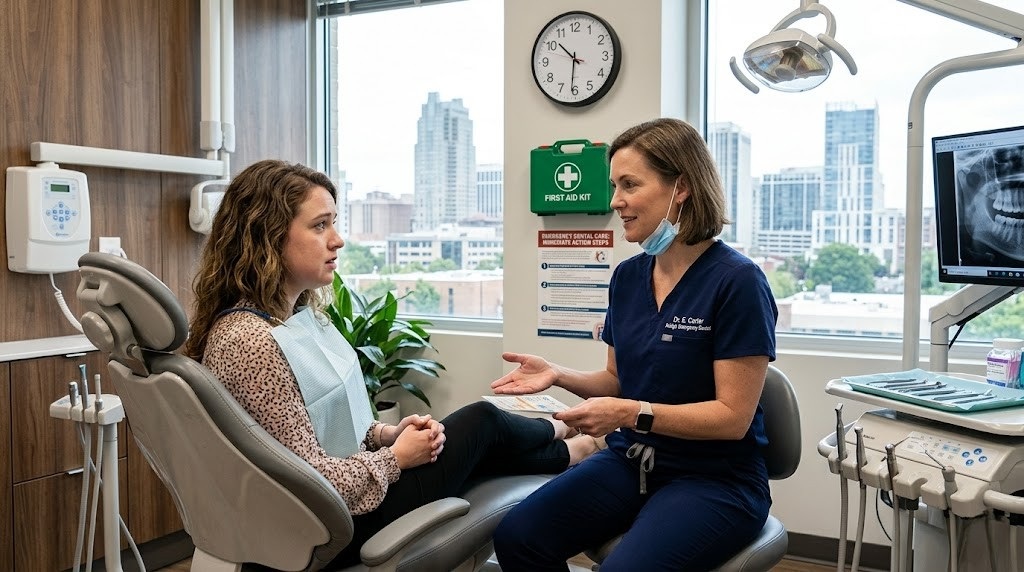
Dental emergencies happen when you least expect them. Whether it’s a fractured tooth after biting down on the wrong thing or from an injury, there’s a way to approach it in an emergency. Since there is always so much to deal with, having a plan can really work wonders when you encounter an emergency. Here in Raleigh, where the pace of life never slows down, time is often of the essence in a dental emergency. A quicker response time may prevent you from losing the tooth and will significantly reduce the pain.
Though it can seem like the end of the world, managing your dental crisis until you can reach your dentist is an achievable with the right approach. In this blog, you will learn about what to do in the first 30 minutes post-dental emergency to restore your dental health.
What Is Considered A Dental Emergency?
There are many types of dental emergencies. This can include toothaches that cause intense pain, knocked-out teeth, broken teeth, and injuries to the soft tissues in your mouth, and each of these dental problems requires the right course of action when they occur. These emergencies need immediate attention from a dentist.
Dental emergencies are sudden, and recognizing one will make it easier to receive timely, efficient treatment. You know there’s an emergency when you are in excruciating pain, blood is running from your mouth, or a tooth an injured or broken. There’s absolutely no waiting for it to heal or subside; it’s important to seek an emergency dentist in Raleigh as soon as possible.
Immediate Steps to Take in a Dental Emergency
If you encounter a dental crisis, it is important to act as quickly as possible. The initial actions that you take can have a great effect on the eventual outcome. Follow these initial steps to reduce trauma and prevent additional pain.
1. Control the Bleeding and Swelling
The first step you should take in any emergency situation is to stop any bleeding and reduce swelling, if present. If the trauma to the mouth resulted in bleeding, then bite down firmly but gently on clean cloth or sterile gauze and hold until the bleeding ceases. Reducing swelling will often help the patient manage other pain. If you notice any swelling, apply a cold pack to the outside of the face near the affected area.
2. Protect the Tooth or Trauma
The time during which a tooth can be saved if it is removed from the socket depends greatly on how quickly it is done. Try to find any knocked-out teeth and only pick them up by the crown-avoid touching the root. Rinse it off with only tap water, then carefully put it back into the socket without forcing it; if it does not readily pop back into place, simply hold it in place. If you cannot get the tooth into the socket, you can place it in a cup of your saliva or milk until you see the dentist. If you crack a tooth, be very careful when chewing and try to protect it with dental wax or a soft piece of cloth.
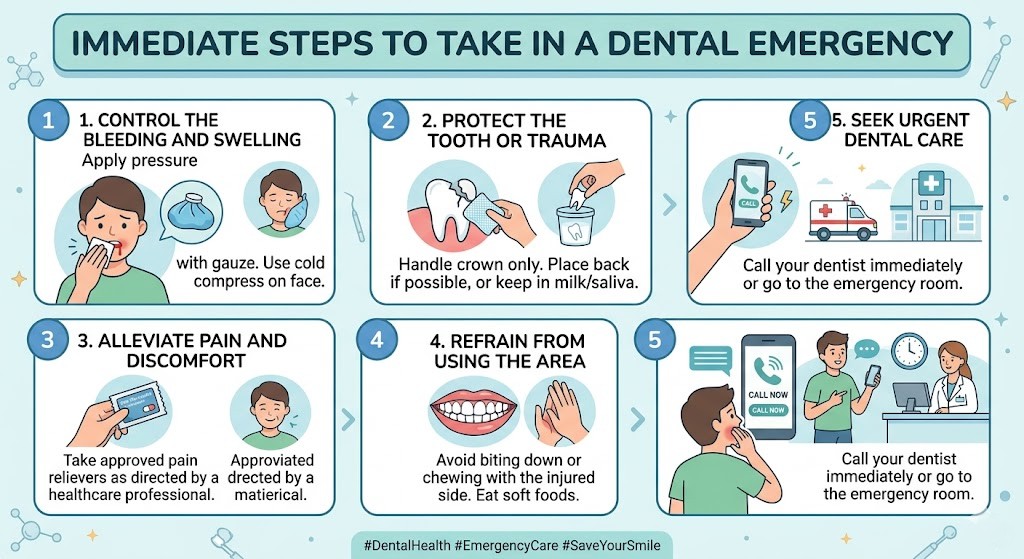
3. Alleviate Pain and Discomfort
When dealing with pain, it is usually wise to take something orally to reduce the pain, but not putting aspirin on the tooth is strongly encouraged, as it will burn the surrounding gum tissue. Ibuprofen is typically an appropriate selection to reduce any swelling. Rinsing with warm saltwater is also recommended, as it can help reduce bacteria that may be causing the infection and ease some of the discomfort.
4. Refrain from Using the Area
If you injured your tooth, it is not recommended to bite or chew on the area. Until you can see your dentist, do not eat hard or sticky foods. If you notice that an area is swollen, do not prod or poke it with your tongue, as this will only further irritate the injury.
5. Seek Urgent Dental Care
Even if the bleeding stops or the pain lessens, it is crucial to go see an urgent dentist in Raleigh immediately. By waiting, you are putting yourself at a higher risk for infection and other injuries, and you may lose the tooth altogether. An urgent dental appointment will allow an assessment of the condition and provide the necessary treatment to heal the injury.
Why Time is Critical in a Dental Emergency
In a dental emergency, the first thirty minutes are crucial to the outcome of the injury. For instance, if a tooth is knocked out, it is highly recommended that you seek medical attention as quickly as possible to maximize the chances of saving it. The socket needs to remain moist, and the tooth should be reimplanted as soon as possible in order to maximize the chances of successful replantation.
Similar dental problems, such as a severe toothache or a cracked tooth, need to be addressed as quickly as possible to minimize the risk of infection, abscess, and even eventual loss of the tooth. By seeking treatment from an emergency dentist in Raleigh, you know you will get help exactly when you need it, and you can be assured that you and your smile are protected.
How to Prevent Future Dental Emergencies
Although not all dental emergencies are preventable, there are many ways you can reduce the risk of one. One of the most obvious things to do is to invest in a mouthguard if you play sports or are involved in a sport that carries a risk of facial impact. Maintaining good oral hygiene will also help prevent emergencies by keeping cavities in check so they don’t lead to more serious problems later.
If you grind or clench your teeth when you sleep, consider talking to your dentist about a custom-fitted night guard to prevent wear and tear on your teeth. Lastly, visit your dentist regularly so they can assess and clean your teeth, reducing the risk of serious problems in the future.
When to Seek Emergency Dental Care
If you present any of the following symptoms, you should seek immediate attention from urgent dentistry:
- Persistent and severe toothache
- Loosened or lost teeth
- Cracked or broken teeth with sharp edges
- Continued and uncontained swelling or bleeding
- Difficulty chewing, speaking, or swallowing
- Presence of pus
It is generally better to err on the side of caution if you are in any doubt regarding the severity of your injury or symptom. An emergency dental practitioner will determine if immediate care is needed.
Taking the Next Step in Your Dental Care
Dental emergencies are unpredictable, but with clear thinking, you should know what to do. The earlier you visit an emergency dentist in Raleigh, the higher the chance of saving your tooth. Our dentists at Gentle Smiles of Raleigh are eager to offer immediate, sensitive help during emergencies.
Don’t delay during a dental emergency. Call Gentle Smiles of Raleigh today to make an appointment or for any other assistance and get the quality dental care you deserve.
Questions People Ask About Dental Emergency
1. What should I do if I knock out a tooth?
If you knock out a tooth, try to reinsert it into the socket, holding it by the crown. If not possible, store it in milk or saliva and seek immediate care from an emergency dentist in Raleigh.
2. How can I relieve a toothache until I get to the dentist?
To ease a toothache, rinse your mouth with warm salt water and use over-the-counter pain relievers like ibuprofen. A cold compress on your cheek can help reduce swelling while you wait for your emergency dentist in Raleigh.
3. What if I have a cracked tooth?
For a cracked tooth, avoid chewing on it to prevent further damage. Keep the area clean, and contact your emergency dentist in Raleigh for immediate care. They may recommend a crown, bonding, or other treatments to fix it.
4. Can an emergency dentist save a broken tooth?
Yes, an emergency dentist in Raleigh can help save a broken tooth by assessing the damage and offering treatments like dental bonding, crowns, or root canals, depending on the severity of the break, to restore function and appearance.
5. What should I do if I have soft tissue injuries in my mouth?
For soft-tissue injuries, rinse your mouth with warm salt water to clean the area, then apply gauze to stop bleeding. If bleeding persists or if the injury is severe, contact your emergency dentist in Raleigh for immediate care.
6. How can I prevent future dental emergencies?
To prevent dental emergencies, wear a mouthguard while playing sports, avoid chewing hard objects, and maintain good oral hygiene. Regular dental check-ups help catch potential issues early, reducing the risk of serious dental problems down the line.